Quick Answer: The best baby girl outfits combine soft, skin-safe fabrics with practical closures like snaps and zippers. Cotton-based sets, rompers, and onesie bundles are top choices for newborns through 24 months. Parents and grandparents shopping for girls clothing online should prioritize stretch, breathability, and wash-safe prints that stay bright after repeated laundering.
There’s a moment every new parent knows well: you’ve dressed your baby in the cutest outfit you own, and it’s destroyed by lunch. Blowout, spit-up, mystery stain. The outfit cost more than you’re comfortable admitting, and it lasted four hours.
The real problem isn’t taste. Most parents have great taste. The issue is that the baby clothing industry sells on looks and ignores the two things that actually matter: how long it survives, and how easy it is to get on and off a wriggling seven-month-old at 6 a.m.
Here’s what most people miss: the best baby girl outfits aren’t just the ones that photograph well. They’re the ones that make the whole morning routine easier without sacrificing the style that makes dressing your little one fun in the first place.
Why Fabric Is the First Decision, Not the Last
Newborn skin runs sensitive in ways adult skin doesn’t. Dermatologists at the American Academy of Pediatrics have consistently noted that synthetic blends, rough seams, and chemical dyes are common irritants in babies under six months. This isn’t a niche concern.
The two fabrics that consistently outperform everything else for babies aged newborn to 18 months are GOTS-certified organic cotton and bamboo-modal blends. Organic cotton is breathable and hypoallergenic. Bamboo-modal is softer than standard cotton and regulates body temperature better, which matters for babies who can’t regulate their own.
What the Tags Actually Tell You
A tag that says ‘100% cotton’ doesn’t tell you whether it’s combed, ring-spun, or interlock knit. Interlock knit is the heavyweight of baby cotton. It doesn’t pill, keeps its shape through fifty washes, and still stays soft. Single-jersey cotton is lighter and cheaper but pills fast. If you’re choosing between two otherwise identical outfits, check the fabric weight before you check the price.
The Hidden Cost of Pretty Fastenings
Button-front onesies look gorgeous in product photos. They are a nightmare at 3 a.m. Snap closures along the inseam are the gold standard for baby girl clothing worn regularly. The snap count matters too: three or four across the bottom means fast changes. Two snaps means you’re wrestling with fabric while the baby squirms.
Age-by-Age Guide: What Actually Works
The right outfit changes fast. What works at eight weeks doesn’t work at eight months, and parents who don’t know this spend money on sizing mistakes that bypass the wearable window entirely.
Newborn to 3 Months
Wrap-style onesies and gown-style sleepers are the best choices here. They go on over the head without requiring limbs to be threaded through armholes while the baby is floppy and uncooperative. Side-snap kimono tops are also excellent. Skip anything with a defined waistband. At this stage, babies spend most of their time lying down, and waistbands create pressure points that cause discomfort.
4 to 12 Months
This is when one-piece rompers become the MVP of the wardrobe. They stay tucked, they don’t ride up, and they don’t expose baby skin to cold floors when the baby starts scooting. Look for rompers with leg snaps that open fully at the bottom for fast diaper access. At this stage, girls’ clothing in bold prints and character-inspired designs starts to genuinely show off, because the baby is upright enough to actually wear the look.
12 to 24 Months
The toddler phase needs elastic waistbands. Full stop. Buttons at this age are a battle you won’t win consistently. Two-piece sets with soft leggings and a graphic top are the easiest format to pull on fast, layer for weather changes, and wash repeatedly without losing shape. Coordinated sets also make the morning decision faster, which matters more than parents expect until they’re running late.
What to Actually Look for When Shopping Online
The biggest risk in buying baby girl clothing online is fit variation. Sizes run inconsistently across manufacturers. A brand sold on a third-party platform with no standardized sizing chart will give you 12-month pieces that fit a 6-month-old or swamp a 14-month-old.
Four things to check before you add to cart: the actual garment measurements in centimeters or inches (not just age sizing), the return window, the fabric content, and whether the product images show the item on a real baby or only a flat lay. Flat-lay photos hide a lot of fit information. If the brand only shows folded product shots, that’s worth noting.
Girls clothes online have exploded as a category in the last three years, which is genuinely good news for parents. There are more options than ever at every price point. The trade-off is that the low-quality end of the market has also grown. A little due diligence on material specs saves a lot of returns.
Building a Rotation That Survives the Week
The most practical wardrobe a baby girl needs isn’t large. It’s deep. Four to six everyday outfits in the current size, two or three slightly larger sizes for rapid growth spurts, one or two nicer sets for occasions, and enough sleep-safe onesies to get through a laundry cycle. That’s the core.
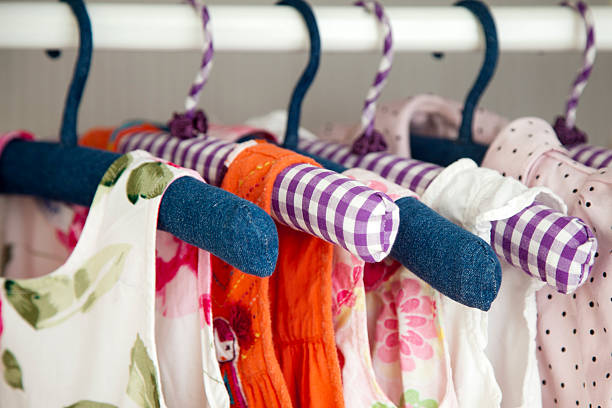
Grandparents shopping for gifts tend to go for the most elaborate option available. Genuinely useful gifts are the everyday pieces: a pack of four matching onesies, a two-pack of soft leggings, or a romper set in a size larger than the current one. The memorable gift is usually the one that gets worn fifteen times, not the one that got saved for a photo op and outgrown before the family got around to using it.
Frequently Asked Questions
What are the best baby girl outfits for newborns?
Wrap-style kimono onesies and gown-style sleepers are the most practical for newborns. They go on easily, allow full diaper access, and avoid the waistband pressure points that cause fussiness in babies under three months. Soft organic cotton is the safest fabric choice for newborn skin.
What size should I buy for a baby girl gift?
Go one size up from the current age. Babies grow fast and unpredictably, so a 12-month gift for a 9-month-old will get more use than an exact-size purchase that may be outgrown before it ships. Check the brand’s actual garment measurements if available.
What is the difference between baby girl clothing and toddler clothing?
Baby clothing runs from newborn to about 18-24 months and typically features snap closures, softer knit fabrics, and designs that allow diaper access. Toddler clothing begins around size 2T, uses elastic waistbands and pull-on styles, and is cut for a child who is walking and moving actively.
Are character-themed baby girl outfits safe?
Yes, as long as the prints use water-based, CPSC-compliant dyes. Character-inspired designs on certified organic or OEKO-TEX Standard 100 certified fabrics are safe for baby skin. Always check that prints do not include raised plastic graphics on pieces worn by babies under 12 months, as these can peel and present a choking risk.
How many outfits does a baby girl need per week?
Plan for at least five to six everyday outfits per week, accounting for one to two changes per day. Babies go through clothing fast due to feeding, diapering, and drool. Having enough rotation to cover a laundry cycle without running short is the practical minimum.